Josephine Burge: Grace, Dignity, and a Life Beyond the Spotlight
In a world that rewards visibility, Josephine Burge made a different and deliberate choice. She stepped back from the glare, raised her family in the quiet, and built a life defined not by fame but by something far rarer — integrity lived privately, day after day.
The name Josephine Burge may not appear in movie credits or tabloid headlines, but it resonates deeply for anyone who follows the history of British cinema. Known primarily as the wife of legendary actor Oliver Reed, Josephine Burge carved out a meaningful existence that stood in striking contrast to the chaotic brilliance of her husband’s public life. Her story is one of quiet resilience, unwavering loyalty, and the kind of personal strength that rarely gets the recognition it deserves.
This article explores who Josephine Burge is, where she came from, what her marriage to Oliver Reed was truly like, how she protected her family after his passing, and why, decades later, her name continues to draw genuine curiosity from people around the world.
Who Is Josephine Burge? Early Life and Background
Josephine Burge was born in England in 1964. Very little verified information exists about her early years, which is itself a reflection of the life she would go on to lead — one guarded from external scrutiny, shaped by personal values rather than public performance. She did not grow up in celebrity circles, nor did she pursue a career in entertainment before meeting Oliver Reed. She was, by all available accounts, a young British woman with a grounded disposition and no particular appetite for fame.
What shaped Josephine Burge in her formative years remains largely out of the public record. However, those who have studied her conduct throughout her adult life often observe a consistency that speaks to a stable and values-driven upbringing. Patience, emotional intelligence, and a deliberate sense of dignity appear not as learned responses to crisis, but as core traits she brought into her relationship with one of Britain’s most volatile and celebrated screen legends.
It was in the early 1980s that Josephine Burge first crossed paths with Oliver Reed — an actor whose reputation for wild off-screen behaviour was nearly as legendary as his talent. At the time, Reed was in his mid-forties, recently divorced, and already established as one of the most magnetic and unpredictable figures in British film. The age gap between them — roughly 25 years — immediately drew press attention, but Josephine never appeared rattled by the scrutiny.
“She was more than just his wife; she was a stabilising influence in a life lived on the edge of excess.” — Widely observed by Reed’s biographers and contemporaries
The Marriage of Josephine Burge and Oliver Reed
A Wedding That Quietly Defied Expectations
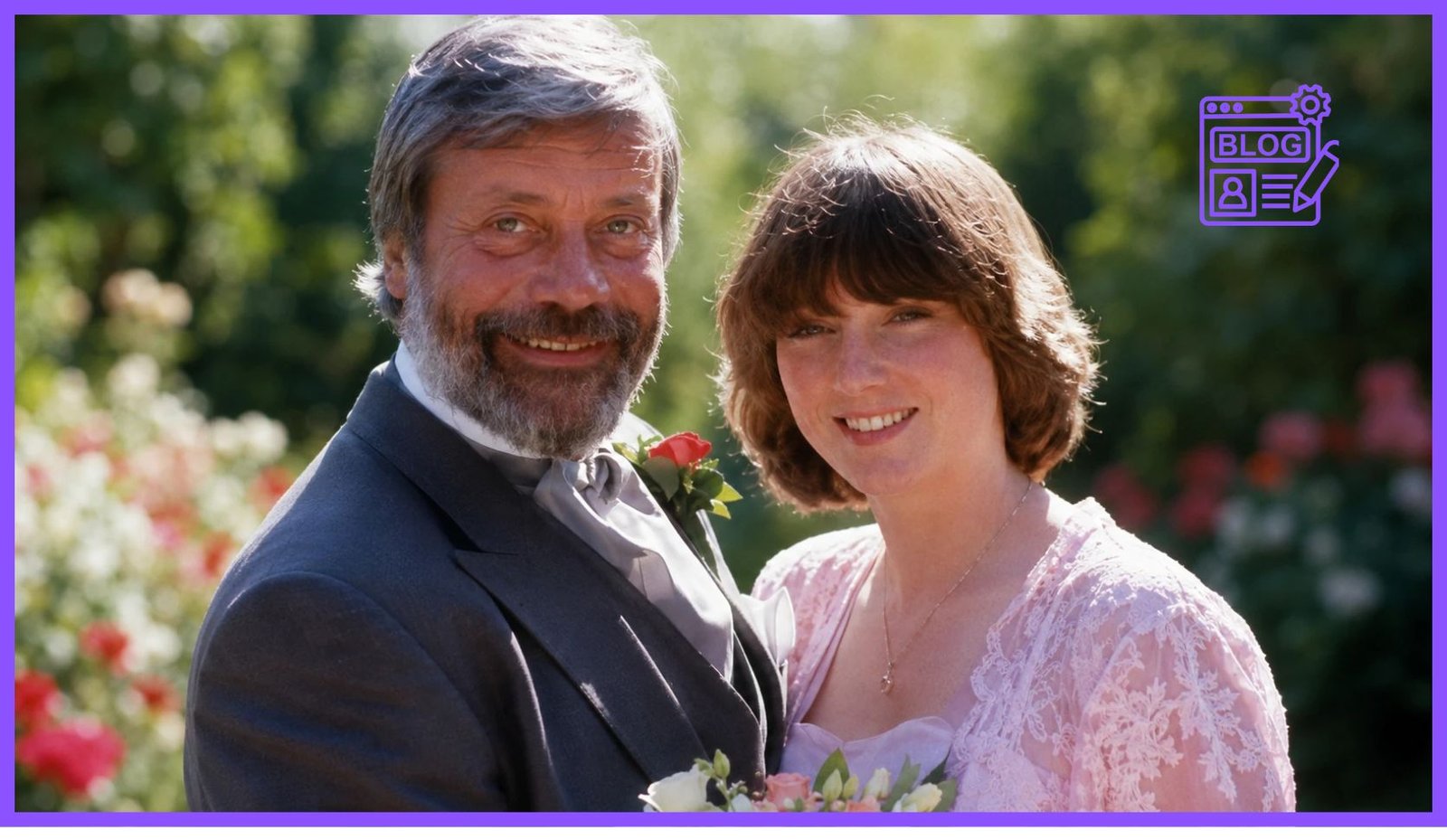
On 7 September 1985, Josephine Burge married Oliver Reed in a civil ceremony in Epsom, Surrey. She was 21 years old; he was 46. The wedding itself was understated — reflecting both Josephine’s preference for privacy and her pragmatic approach to life alongside a man who attracted cameras wherever he went. While the British press had its opinions about the union, those who knew the couple personally often described the marriage as surprisingly tender and mutually devoted.
Oliver Reed had a well-documented history of heavy drinking, tabloid-bating antics, and tempestuous personal relationships. His first marriage had ended in divorce, and his romantic life before Josephine Burge had been colourful, to say the least. Yet something about their partnership shifted the dynamic considerably. Friends and biographers alike have noted that Josephine brought a kind of calm to Reed that previous relationships had not managed to sustain.
Reed reportedly referred to Josephine with great affection, calling her his “beautiful Jo.” While he never entirely abandoned the larger-than-life persona that defined his public image, those close to the couple observed a softening — a man who, at home in the company of Josephine Burge, was capable of warmth, domesticity, and genuine tenderness.
Family Life and the Move to Ireland
Josephine Burge and Oliver Reed had two children together, and the couple made a deliberate choice to centre their life around family rather than fame. In the early 1990s, they relocated to Churchtown, County Cork, in Ireland — a move that significantly reduced their exposure to the British media and allowed them to build a more private domestic existence.
Ireland suited the life that Josephine Burge had always seemed to want. Away from London’s entertainment circuit, the couple could raise their children in something approaching normality. Josephine’s role as a mother became one of the most defining aspects of her identity. She was determined that her children would grow up shielded from the pressures and peculiarities that came with having a famous surname, and by most accounts, she succeeded in that goal with remarkable consistency.
While Oliver Reed continued to work — appearing in films throughout the late 1980s and 1990s — Josephine maintained the household with quiet authority. She did not seek her own spotlight, did not leverage her proximity to celebrity for professional gain, and did not participate in the social spectacles that had characterised Reed’s earlier years. She was, in the truest sense, the still centre of an often turbulent world.
Oliver Reed’s Legacy and Josephine Burge’s Enduring Strength
Oliver Reed passed away in May 1999, in Valletta, Malta, while filming what would become one of cinema’s most celebrated productions — Ridley Scott’s Gladiator. His death, caused by a heart attack, was sudden and widely mourned. Reed had been giving one of the performances of his late career, and the film’s producers had to use digital technology to complete his scenes posthumously. It was a poignant and fittingly dramatic end for a man who had lived so publicly.
For Josephine Burge, however, the grief was entirely private. She did not give interviews. She did not appear at public memorials in a way designed to attract sympathy or attention. She mourned as she had always lived — away from the cameras, with her focus on her children and her own internal resilience. This decision, entirely in keeping with her character, only deepened public respect for Josephine Burge among those who had followed her story over the years.
It would be a mistake to read Josephine’s absence from the public sphere as passivity or diminishment. Rather, it was a form of agency — a conscious refusal to let grief be commodified or to allow her family’s most vulnerable moments to become public entertainment. In an era when celebrity widows were often pressured into media appearances, Josephine Burge chose silence as her most powerful statement.
Life After Oliver Reed
In 2001, Josephine Burge remarried. She wed Walter Ryan-Purcell, a country squire from County Cork — a man whose life was equally removed from the entertainment world. The wedding was, predictably, a private affair, consistent with the values Josephine had always demonstrated. She described the union as emotionally grounded and built on shared values, a quiet counterpoint to the spectacular, headline-generating life she had previously inhabited.
Since then, Josephine Burge has continued to live away from public attention, maintaining the privacy she has always prioritised. Her children have been raised in that same spirit — free from the burden of their father’s fame, equipped instead with a mother’s steadiness and sense of self. As of 2026, Josephine Burge is alive, in her early sixties, and by all indications continues to live with the same dignity and intentionality that has defined her entire adult life.
Why Josephine Burge Still Matters: A Legacy of Quiet Influence
In a culture that has grown increasingly fixated on visibility — on followers, appearances, and the performance of personal narrative — the life of Josephine Burge offers a genuinely countercultural model. She is proof that influence does not require a platform. That strength can be expressed through restraint. That a person can live meaningfully, even alongside greatness, without being subsumed by it.
Josephine Burge is remembered, in the way that truly matters, by those who knew her and those who studied her conduct over time. She supported one of Britain’s most charismatic and complicated actors through fourteen years of marriage, raised children who were sheltered from the worst aspects of celebrity culture, handled public loss with composure, and rebuilt her life on her own terms after Reed’s death. That is not a small life. That is a remarkably full one.
It is also worth noting that Josephine Burge’s story sits within a broader conversation about the women who have stood beside famous men in the British entertainment industry — women whose contributions to stability, home-making, and emotional labour are rarely treated as historically significant, even when they clearly were. The renewed interest in Josephine Burge is partly a reflection of that broader cultural reckoning: a growing willingness to ask not just who the star was, but who held the world together while they shone.
Josephine Burge and the Art of Living Privately
Perhaps what is most striking about Josephine Burge is not any single decision she made, but the coherence of her entire life’s pattern. From the moment she entered public awareness through her marriage to Oliver Reed, to her conduct after his death, to her second marriage and continued absence from media, there is a through line of deliberateness. She has never appeared to be reacting to events. She has always seemed to be acting from values.
That kind of internal consistency — maintaining one’s principles across decades, through loss, public pressure, and personal reinvention — is genuinely rare. It makes Josephine Burge more than a biographical footnote in Oliver Reed’s story. It makes her a figure of independent interest, someone whose choices carry a quiet philosophical weight that rewards sustained attention.
For anyone researching the history of British cinema, the social history of celebrity culture, or simply the personal history of Oliver Reed, the name Josephine Burge opens onto a story that is entirely worth understanding on its own terms. She did not seek the light. But she has, in her own way, left one.
Frequently Asked Questions
Q1: Who is Josephine Burge?
Josephine Burge is a British woman best known as the second wife of celebrated actor Oliver Reed. Born in England in 1964, she married Reed on 7 September 1985 in Epsom, Surrey, and remained married to him until his death in May 1999. Throughout their marriage, she was widely recognised as a stabilising and grounding presence in Reed’s often turbulent life.
Q2: Is Josephine Burge still alive?
Yes, Josephine Burge is still alive as of 2026. Born in 1964, she is in her early sixties. Following Oliver Reed’s death in 1999, she remarried in 2001 and has continued to live a quiet, private life away from media attention. Her absence from public life is widely understood to be a deliberate and long-standing personal choice.
Q3: Did Josephine Burge and Oliver Reed have children together?
Yes, Josephine Burge and Oliver Reed had two children together during their fourteen-year marriage. The family relocated to County Cork, Ireland, in the early 1990s to facilitate a more private family life. Josephine has consistently shielded her children’s identities from public attention, and Reed also had children from a previous relationship whom Josephine embraced with care and grace.
Q4: Did Josephine Burge remarry after Oliver Reed’s death?
Yes. In 2001, Josephine Burge married Walter Ryan-Purcell, a country squire from County Cork, Ireland. The wedding was a private, low-key event consistent with her lifelong values. Details about her current domestic life remain private, as she has never sought press coverage on the subject.
Q5: Why is Josephine Burge significant beyond her connection to Oliver Reed?
Josephine Burge is recognised as a figure of independent cultural significance because she demonstrated remarkable consistency of character over decades — choosing privacy and family over the celebrity opportunities that her proximity to fame could have provided. Her story contributes meaningfully to broader conversations about the role of partners and supporting figures in the lives of public personalities, and the quiet strength that holds famous lives together behind the scenes.

Ryan Beck is an experienced SEO strategist and blogging expert with over 20+ years of hands-on experience in digital marketing. He has built a strong reputation for helping businesses grow their online presence through data-driven SEO strategies, high-quality content creation, and audience-focused blogging.