Hazel Vorice McCord: The Remarkable Woman Behind Two Entertainment Legends
Introduction
Behind virtually every celebrated public figure, there is a private one whose influence shaped everything. In the story of American entertainment, few examples of this truth are more compelling than that of Hazel Vorice McCord — a woman who never sought the spotlight, never appeared on a television screen, and yet whose values, discipline, and love gave rise to two of the most enduring performers in American comedy and television history.
Hazel Vorice McCord is best known today as the mother of Dick Van Dyke and Jerry Van Dyke, two brothers whose combined contribution to American entertainment spans more than half a century. But reducing Hazel to a biographical footnote in her sons’ stories would be a profound injustice to a life that was rich, purposeful, and quietly extraordinary on its own terms.
She was born in 1896 and died in 1992 — a span of 95 years that took her from the agricultural rhythms of rural Illinois through two world wars, the Great Depression, the rise of television, and the cultural revolution of the 1960s and beyond. Through all of it, Hazel Vorice McCord remained a steady, grounding presence for her family and community. This is her story, told as it deserves to be.
Early Life: Growing Up in Rural Illinois at the Turn of the Century
Hazel Vorice McCord was born on October 6, 1896, in East Lynn — a small rural village tucked into Vermilion County in east-central Illinois. Her parents were Charles Cornelius McCord and Adeline Verinda Neal McCord, who raised her in a household rooted in Midwestern traditions of hard work, faith, and education.
Life in East Lynn at the turn of the twentieth century was defined by agriculture, community proximity, and self-reliance. Neighbors knew each other by name. Children helped with chores before they picked up books. Faith was woven into the structure of daily life rather than reserved for Sundays alone. It was the kind of upbringing that did not produce flashy individuals — it produced durable ones.
What makes the origins of Hazel Vorice McCord even more fascinating is her lineage. Research into her family history indicates she was a descendant of Mayflower passengers — a deep-rooted American heritage that speaks to generations of resilience, adaptation, and commitment to building something lasting in a new world. That spirit of endurance would prove to be one of the most defining characteristics of Hazel’s own life.
Growing up in the early 1900s meant navigating a world in rapid transition. Towns were growing, new industries were emerging, and education was becoming increasingly central to a young person’s future prospects. Hazel came of age precisely at the intersection of old rural traditions and the new modern expectations taking shape across America — and she navigated that transition with both pragmatism and purpose.
Education and Career: A Woman of Learning and Practical Skill
At a time when women’s professional opportunities were severely limited, Hazel Vorice McCord made the most of every avenue available to her. Historical records describe her professional life in terms that reflect the range of meaningful roles she occupied: teacher, stenographer, and bill clerk — each position requiring a different but demanding skill set.
Her work as a teacher is particularly significant. In early twentieth-century America, teaching was one of the few genuinely respected professional roles available to educated women, and it required not only knowledge but the ability to lead, inspire, and guide young minds through the fundamentals of learning. That Hazel held this role tells us something important about her intellectual capacity, her patience, and her natural inclination to invest in the development of others.
Her work as a stenographer required a different kind of discipline entirely — the ability to listen precisely, record accurately, and perform under the pressures of professional settings where errors were costly. It was demanding, skilled work that placed her squarely in the professional world at a time when many women of her era were confined exclusively to domestic roles.
Together, these professional dimensions of the Hazel Vorice McCord story paint a portrait of a woman who was intellectually capable, professionally adaptable, and genuinely committed to contributing meaningfully beyond the boundaries of her home — all qualities that would eventually become visible in the characters and values of her famous sons.
Marriage and Family: Building a Life with Loren Van Dyke
Around 1925, Hazel Vorice McCord married Loren Wayne Van Dyke — known affectionately as “Cookie” — a traveling salesman whose work took him away from home for stretches of time and placed much of the day-to-day responsibility of family life firmly in Hazel’s capable hands. The marriage would prove to be the central chapter of her adult life and the context in which her most lasting influence would be exercised.
Together, Hazel and Loren raised two sons. Dick Van Dyke was born in 1925, the same year as their marriage, and Jerry Van Dyke followed in 1931. Both boys grew up in Danville, Illinois, where the family put down roots and where Hazel’s influence on their early development would be most directly felt.
The home that Hazel Vorice McCord built was not defined by wealth or social prominence. It was defined by values — by the consistent modeling of responsibility, warmth, creativity, and humor that would eventually become the signature qualities of both her sons’ public personas. Dick Van Dyke has spoken at various points throughout his career about the foundational role his upbringing played in shaping his outlook on life, his sense of humor, and his professional work ethic. The thread connecting those qualities to Hazel is unmistakable when you understand the home she created.
The Van Dyke Legacy: How Hazel Vorice McCord Shaped Two Icons
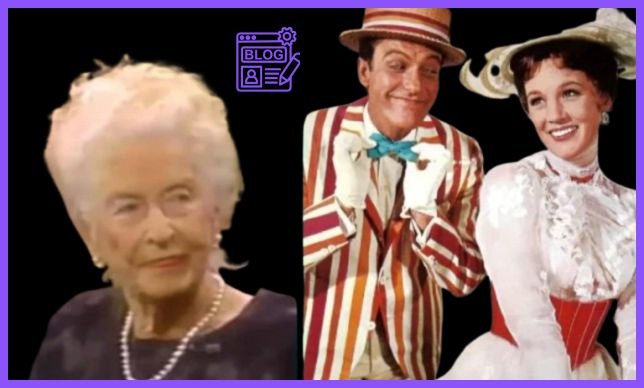
To fully appreciate the significance of Hazel Vorice McCord, it is worth pausing on just how extraordinary the careers of both her sons became. Dick Van Dyke is one of the most beloved entertainers in American history — the star of The Dick Van Dyke Show, a landmark television comedy that ran from 1961 to 1966 and is still celebrated today as one of the finest sitcoms ever produced, and the unforgettable Bert in the 1964 Disney classic Mary Poppins. His career has spanned more than seven decades and earned him five Emmy Awards, a Grammy, and a Tony, among numerous other honors.
Jerry Van Dyke, while less celebrated than his brother, built his own significant career in American television — perhaps best remembered for his role as Luther Van Dam in the long-running sitcom Coach, which aired from 1989 to 1997. He brought warmth, comic timing, and an innate likability to every role he played.
What both brothers shared — beyond their family name — was a quality of genuine decency that shone through their performances and their public lives. That quality of character does not emerge from nowhere. It is planted and nurtured, usually in childhood, usually by the people who are present for the unglamorous work of raising a human being well. In the story of the Van Dyke family, that person was Hazel Vorice McCord.
Her influence was not dramatic or publicly visible. It was the accumulation of thousands of small daily acts — lessons taught, values modeled, humor encouraged, creativity given room to breathe, and love made consistently available. That is the kind of influence that endures across generations, and it is the truest measure of Hazel’s legacy.
Community Presence: Hazel Beyond the Home
The story of Hazel Vorice McCord is not confined to her role as a mother and wife. Throughout her life, she maintained an active presence in her wider community — a natural extension of the values her own upbringing had instilled. She was involved in her local church, helping to organize events and bring people together in the kinds of community activities that were the social and spiritual fabric of Midwestern American life in the early and mid twentieth century.
Her investment in community life reflected a broader understanding that family and society are not separate — that the health of one depends on the vitality of the other. In this sense, Hazel Vorice McCord embodied a model of civic participation that has become rarer but no less valuable in contemporary life. She understood that building a good community was not someone else’s responsibility. It was hers.
This community orientation also likely shaped both Dick and Jerry’s sense of social responsibility and their genuine engagement with the audiences and communities they served throughout their careers. Entertainers who care about their audiences do not manufacture that care in a professional context — they bring it from somewhere deeper. For the Van Dyke brothers, that somewhere deeper points directly back to the example of Hazel Vorice McCord.
Living Through History: A Life Shaped by Monumental Events
To read the lifespan of Hazel Vorice McCord — 1896 to 1992 — is to read a compressed history of modern America. She was born in the era of horse-drawn transport and died in a world of personal computers and satellite television. In between, she lived through events that reshaped the entire social and economic landscape of the nation.
She came of age during World War One. She raised her young family through the Great Depression — a period of economic devastation that tested every family in America and demanded exactly the kind of resilience, resourcefulness, and steadiness that Hazel had been building since childhood. She weathered World War Two while her boys were growing into young men. She watched the birth and explosion of television — the very medium that would make her sons household names — from its earliest days.
Through all of these upheavals, Hazel maintained the kind of stable, purposeful presence that allowed her family to feel grounded when everything around them was shifting. That capacity for stability under pressure is not incidental to her story — it is central to it. The same quality that allowed her community to trust her, that made her an effective teacher and reliable stenographer, also made her the kind of mother who could raise two creatively ambitious, emotionally healthy sons in genuinely difficult historical circumstances.
Later Years and Legacy: A Life Well Lived
Hazel Vorice McCord lived long enough to see both her sons reach the very heights of American entertainment. By the time Dick Van Dyke’s show had entered television history and Jerry had found his own successful footing on screen, Hazel was already in her seventh and eighth decades — watching the fruit of a lifetime of careful, loving investment come fully into bloom.
She passed away in 1992 at the age of 95, and was laid to rest at Sunset Memorial Park. By any measure, she had lived a full and purposeful life — one that touched far more people than the small circle that ever knew her name.
Her passing marked the end of an era for her family, but her legacy did not diminish with her death. It continued — in the performances of her sons, in the characters they brought to life, in the values they carried forward, and in the family they in turn helped to shape. Legacy of this kind is not loud. It does not require monuments or headlines. It requires only the consistent investment of love, wisdom, and care across the years — exactly what Hazel Vorice McCord provided throughout her extraordinary, quiet life.
Why Hazel Vorice McCord’s Story Matters Today
There is something deeply countercultural about telling the story of Hazel Vorice McCord in the contemporary moment. In an age where visibility is equated with value and social media metrics are used to measure significance, a woman who never sought public recognition and who exercised her greatest influence entirely in private seems almost impossibly remote.
And yet her story resonates precisely because it challenges those assumptions so completely. The influence of Hazel Vorice McCord on American cultural life — mediated through the careers of her sons — is arguably broader and more enduring than that of many figures who spent their lives in the spotlight. She reminds us that the most lasting contributions to any culture are often made by people who never appear in its records — people who simply show up, day after day, and do the essential invisible work of raising the next generation with integrity, warmth, and purpose.
Her story is a tribute to the power of quiet influence, the importance of values rooted in genuine care, and the enduring truth that what happens inside a family home can ripple outward in ways that touch millions of lives across generations.
Conclusion
The name Hazel Vorice McCord may not appear in entertainment history books, but her fingerprints are on some of the most beloved moments in American television and film. She was a teacher, a professional, a homemaker, a community member, and above all a mother — and she excelled at every one of those roles without ever asking for recognition or reward.
Her life is a reminder that history is not only made by those who stand in front of cameras or command public platforms. It is also made — perhaps more durably — by those who build the human foundations on which public achievement becomes possible. Hazel Vorice McCord built one of those foundations, and American culture is richer for it.
In understanding the Van Dyke family’s contribution to American entertainment, the story of Hazel Vorice McCord is not a footnote. It is the beginning.
Frequently Asked Questions
Who was Hazel Vorice McCord?
Hazel Vorice McCord (1896–1992) was an American teacher, stenographer, homemaker, and community figure best known as the mother of legendary entertainers Dick Van Dyke and Jerry Van Dyke. Born in East Lynn, Illinois, she raised her family in Danville, Illinois, and is widely recognized as the foundational influence behind the Van Dyke family’s values, work ethic, and character. Though she lived entirely outside the public eye, her impact on American entertainment history — through the careers of her sons — is deeply significant.
When and where was Hazel Vorice McCord born?
Hazel Vorice McCord was born on October 6, 1896, in East Lynn, a small rural community in Vermilion County, Illinois. She was the daughter of Charles Cornelius McCord and Adeline Verinda Neal McCord. Research into her family history suggests she was a descendant of Mayflower passengers, giving her a deep-rooted American heritage that reflected generations of resilience and community commitment.
Who did Hazel Vorice McCord marry?
Hazel Vorice McCord married Loren Wayne Van Dyke — nicknamed “Cookie” — around 1925. Loren was a traveling salesman, and together the couple raised two sons: Dick Van Dyke, born in 1925, and Jerry Van Dyke, born in 1931. The family settled and raised their boys in Danville, Illinois, where Hazel’s day-to-day presence and values shaped the character of both men who would go on to become American entertainment icons.
When did Hazel Vorice McCord pass away?
Hazel Vorice McCord passed away in 1992 at the age of 95. She was laid to rest at Sunset Memorial Park. By the time of her death, both her sons had long established themselves as beloved figures in American entertainment — Dick Van Dyke as a five-time Emmy winner and star of one of television’s greatest comedies, and Jerry Van Dyke through his own successful television career, most notably on the sitcom Coach.
Why is Hazel Vorice McCord significant in American cultural history?
While Hazel Vorice McCord never pursued a public career of her own, her significance lies in the profound influence she had on two of America’s most beloved entertainers. Her values — grounded in education, community service, personal responsibility, and genuine warmth — are widely seen as foundational to the character and professional conduct of Dick Van Dyke and Jerry Van Dyke. Her story represents a broader truth about how quiet, private individuals can shape public culture in ways that endure long beyond their lifetimes.

Ryan Beck is an experienced SEO strategist and blogging expert with over 20+ years of hands-on experience in digital marketing. He has built a strong reputation for helping businesses grow their online presence through data-driven SEO strategies, high-quality content creation, and audience-focused blogging.