Blog Whatutalkingboutwillis: The Iconic Catchphrase That Changed TV History Forever
There are certain moments in television history that refuse to stay in the past. Lines that leap off the screen, travel through decades, and still land with the same punch today as they did the first time audiences heard them. Whatutalkingboutwillis is one of those rare, immortal moments — a five-word expression from a late 1970s sitcom that somehow became a universal language for confusion, disbelief, and playful defiance.
Whether you grew up watching it on a tube TV in the 1980s or first encountered it as a meme scrolling through social media, there is a very good chance you already know exactly what this phrase means the moment you hear it. That is the definition of cultural resonance. And that is precisely what this post is here to unpack — deeply, thoroughly, and with genuine appreciation for the phrase, the show, and the extraordinary child actor who made it all possible.
The Origin Story: Where Whatutalkingboutwillis Was Born
To understand why whatutalkingboutwillis still matters today, you have to go back to November 3, 1978. That was the night NBC aired the very first episode of Diff’rent Strokes, a sitcom built around one of the boldest social premises on American primetime television at the time.
The show centered on two young African-American brothers from Harlem — Arnold and Willis Jackson — who are taken in by a wealthy white Manhattan businessman named Phillip Drummond after their mother passes away. Arnold was the younger brother, full of personality, wit, and a refreshing unwillingness to simply accept whatever the adults around him said. Willis, his older and often more serious sibling, frequently found himself on the receiving end of Arnold’s sharp and skeptical reactions.
Arnold Jackson was played by Gary Coleman, a ten-year-old actor from Zion, Illinois, whose natural charm, impeccable comedic timing, and unique screen presence made him one of the most beloved child stars of his generation. The character of Willis was brought to life by Todd Bridges, whose role as the older, more composed brother created the perfect foil for Arnold’s expressive outbursts.
The phrase itself — “What’choo talkin’ ’bout, Willis?” — was Arnold’s trademark response whenever Willis said something that confused him, seemed suspicious, or simply did not add up. It was innocent on the surface, but layered with wit. It was a child questioning an adult-shaped world, and audiences absolutely adored it.
Why the Phrase Connected So Deeply With Audiences
You might wonder why whatutalkingboutwillis became so enduring when thousands of TV catchphrases have come and gone without leaving a trace. The answer lives at the intersection of writing, character, and performance — three elements that rarely align as perfectly as they did here.
The Character Behind the Words
Arnold Jackson was not simply a funny kid who said funny things. He was a fully realized character whose personality made every line feel earned. His curiosity was genuine, his skepticism was rooted in lived experience, and his refusal to accept nonsense at face value made him deeply relatable to viewers of all ages.
The phrase worked so powerfully because it was the perfect summation of who Arnold was — innocent yet sharp, confused yet never passive. He was not asking “What are you talking about?” out of ignorance. He was asking it out of principle. There is a significant difference, and audiences felt it every single time.
Gary Coleman’s Unforgettable Delivery
Even the best-written line in the world can fall flat without the right actor behind it. Gary Coleman brought something to whatutalkingboutwillis that no script could fully capture — a specific physical vocabulary that transformed the phrase into a full comedic experience.
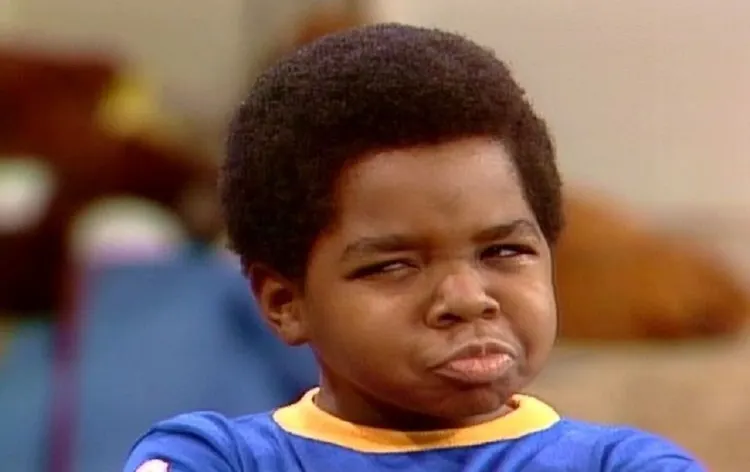
The slight tilt of the head. The narrowing of the eyes. The deadpan expression that somehow communicated both total confusion and total confidence. The perfectly timed pause before delivering the line. These were not accidents. They were the instincts of a genuinely gifted performer who understood, on some deep level, how to hold an audience in the palm of his hand.
Coleman’s delivery made the phrase feel spontaneous every single time, even after viewers had heard it dozens of times. That is a rare talent, and it is a huge reason why the catchphrase outlived the show itself.
The Show’s Social Courage
Diff’rent Strokes was not just a comedy — it was a show that consistently tackled difficult social topics, from racism and class inequality to drug abuse and child safety. Arnold’s catchphrase emerged within this context, giving the phrase a subtle weight beyond its humor.
When Arnold asked whatutalkingboutwillis, he was often genuinely questioning the logic of a world that did not always make sense for someone in his position. That underlying honesty gave the phrase an emotional depth that casual viewers might not have consciously recognized, but everyone felt.
From Living Rooms to the Internet: A Phrase That Refused to Die
Diff’rent Strokes ran for eight seasons across NBC and ABC, finally ending its original run in 1986. Most shows, once off the air, fade into the background of television history. This one did something different. Its central catchphrase simply kept going.
The 1980s and 1990s — Repeated in Every Household
Through the 1980s, whatutalkingboutwillis was repeated in school hallways, at dinner tables, and on playgrounds across America. It was used to react to bad ideas, strange suggestions, and surprising news. Children who had never missed an episode used it. Parents who only half-watched the show used it. The phrase had escaped its original container and become part of everyday American English.
By the 1990s, even as the show was off the air and Gary Coleman had moved on to other chapters of his life, the phrase continued to surface in comedy sketches, film parodies, and late-night television. It was already well on its way to becoming a permanent fixture of the cultural vocabulary.
The Meme Era — A Perfect Fit for Digital Expression
When internet meme culture began to flourish in the 2000s and accelerated through the 2010s, whatutalkingboutwillis found a new and enormous audience. The phrase was tailor-made for the internet age. It is short, instantly recognizable, and carries a universal emotional meaning that requires no explanation.
The GIF of Gary Coleman’s classic puzzled expression became one of the most widely shared reaction images online. People used it on Twitter to react to baffling headlines. They dropped it into Reddit comment threads in response to wild claims. They posted it on Instagram and Facebook whenever something defied all logic. The phrase had become a digital shorthand for “this makes absolutely no sense, and I am calling it out.”
Today, you will find whatutalkingboutwillis used across virtually every social media platform as a reaction to surprising news, absurd statements, and the kind of head-scratching moments that the modern internet delivers in generous quantities every single day.
The Cultural Weight of a Simple Question
It is worth pausing to appreciate just how remarkable the staying power of whatutalkingboutwillis truly is. Most entertainment products — shows, films, songs — have a defined lifespan. They peak, they decline, and eventually they exist only in the memories of those who were there. This phrase operates by completely different rules.
Part of what makes it so durable is its absolute flexibility. You can use it to express confusion. You can use it to express playful disbelief. You can use it sarcastically when someone says something obviously wrong. You can use it humorously when a friend makes an outrageous suggestion. The phrase adapts to the moment rather than demanding the moment adapt to it.
That kind of semantic flexibility is extraordinarily rare in catchphrases. Most phrases from television are so specific to their original context that they lose meaning when transplanted elsewhere. Whatutalkingboutwillis carries just enough context to feel familiar while remaining open enough to apply to almost any situation involving confusion or skepticism.
A Phrase That Speaks Across Generations
One of the most striking things about this expression is how effectively it communicates even to people who have never watched a single episode of Diff’rent Strokes. Younger generations who discovered it purely through memes understood its meaning immediately, because the meaning is embedded in the words themselves.
“What are you talking about, Willis?” — even in its contracted, informal spelling — is immediately readable as a challenge, a questioning, a moment of disbelief. The name “Willis” adds personality without limiting the meaning. It makes the phrase feel personal and specific without making it inaccessible to anyone.
This is a masterpiece of accidental linguistic engineering, and it goes a long way toward explaining why whatutalkingboutwillis continues to show up in conversations, articles, and social media posts nearly five decades after it was first spoken.
Gary Coleman: The Man Who Made It Immortal
No discussion of whatutalkingboutwillis would be complete without a genuine tribute to Gary Coleman, the person whose talent gave this phrase its soul.
Coleman was born on February 8, 1968, in Zion, Illinois. He was adopted as a baby and grew up with serious kidney problems that required multiple transplants and ultimately stunted his physical growth, leaving him at four feet eight inches as an adult. These health challenges shaped his life profoundly, but they did nothing to diminish the enormous talent he brought to every role he played.
His work on Diff’rent Strokes made him one of the highest-paid child actors of the 1970s and 1980s. At the height of the show’s popularity, Coleman was a genuine cultural phenomenon — recognized everywhere he went, beloved by millions of fans, and responsible for sparking conversations about race, class, and family that American television had largely avoided until that point.
Coleman passed away on May 28, 2010, following a brain hemorrhage. He was 42 years old. His death was a genuine loss for everyone who had grown up watching him, laughing with him, and carrying his most famous words into their own daily lives. But the phrase he gave the world — that simple, skeptical, perfectly delivered question — has proven far more lasting than any of us might have predicted.
His legacy is not diminished by the difficulties he faced off-screen. It is, if anything, deepened by the knowledge that the joy he brought to millions came from a person who navigated genuine hardship with remarkable resilience.
How Whatutalkingboutwillis Lives On Today
Today, whatutalkingboutwillis is more than a catchphrase. It is a cultural reference point, a meme template, a nostalgic touchstone, and a linguistic tool all at once. It appears in online headlines designed to catch attention, in comment sections where someone needs a concise way to express disbelief, and in conversations between people of wildly different ages who all somehow share fluency in this particular phrase.
The show itself has found new audiences through streaming platforms and classic TV services, introducing younger viewers to the full context of where the phrase originated. Many of them discover that the show is far richer and more complex than a single catchphrase could possibly suggest — and that discovery tends to deepen appreciation for both the show and the phrase itself.
The word whatutalkingboutwillis has also become something of a search phenomenon. People type it as one long word — the way it sounds when said quickly, the way it looks on a meme — and find a whole ecosystem of content built around this single expression. Blog posts, articles, videos, and fan pages all gather under this improbable keyword, united by a shared affection for one of television’s greatest accidental gifts to the English language.
What Makes a Catchphrase Truly Timeless?
The story of whatutalkingboutwillis offers some genuinely useful lessons about why certain phrases outlast their creators, their shows, and even their eras.
A truly timeless catchphrase needs to be simple enough to remember instantly, flexible enough to apply in many contexts, emotionally resonant enough to feel meaningful, and delivered by a performer charismatic enough to make it feel alive. It helps enormously if the phrase captures something universal about the human experience — in this case, the experience of hearing something confusing or hard to believe and wanting to push back against it.
Every one of those conditions was met the first time Gary Coleman looked at the camera and asked his older brother what on earth he was talking about. The audience laughed because it was funny. They remembered it because it was true. And they kept using it because it remained useful.
That is the full formula for a catchphrase that lasts forever — and whatutalkingboutwillis has followed every step of it to perfection.
Conclusion
Decades after a young actor from Zion, Illinois, first delivered a bemused question to his fictional older brother on a network sitcom, whatutalkingboutwillis remains as vivid and relevant as ever. It has survived the end of its original show, the passing of its creator, the rise and transformation of multiple media formats, and the relentless churn of internet culture — all while continuing to communicate exactly what it always did.
It is a reminder that great art, even the apparently small and incidental kind, can resonate far beyond its original context. It is proof that the right words, delivered by the right person at the right moment, can become genuinely permanent. And it is, perhaps most importantly, a reason to keep appreciating the performers, writers, and creators who give us these lasting gifts — often without knowing that is what they are doing at all.
The next time something confuses you, surprises you, or simply makes you want to raise an eyebrow and demand a better explanation, you already have exactly the right words. Five of them, in fact. And somehow, they never get old.
Frequently Asked Questions About Whatutalkingboutwillis
1. Where does the phrase “whatutalkingboutwillis” originally come from?
The phrase originates from Diff’rent Strokes, an American sitcom that premiered on NBC on November 3, 1978. The character Arnold Jackson, played by Gary Coleman, frequently said “What’choo talkin’ ’bout, Willis?” to his older brother Willis, played by Todd Bridges, whenever he found something confusing or hard to believe. The line quickly became the show’s signature catchphrase and one of the most recognizable quotes in television history.
2. Who said “whatutalkingboutwillis” and what made it so memorable?
The line was said by Gary Coleman in his role as Arnold Jackson. What made it so memorable was the combination of sharp writing, a perfectly realized character, and Coleman’s extraordinary natural timing and physical expressiveness. His signature head tilt, narrowed eyes, and deadpan delivery transformed an ordinary question into an unforgettable comedic moment that audiences repeated endlessly.
3. Why is “whatutalkingboutwillis” still popular today?
The phrase has stayed popular because of its remarkable flexibility and universal meaning. It can express confusion, disbelief, playful skepticism, or sarcasm in almost any situation. It also found a second life in internet culture, becoming a popular meme reaction image and social media phrase. Its simplicity, recognizability, and adaptability make it as useful today as it was in the 1980s.
4. What happened to Gary Coleman, the actor behind the catchphrase?
Gary Coleman, who played Arnold Jackson on Diff’rent Strokes, passed away on May 28, 2010, at the age of 42, following a brain hemorrhage. Throughout his life, he dealt with serious health challenges stemming from congenital kidney disease. Despite personal difficulties in his later years, his legacy as one of television’s most gifted child performers and the creator of one of TV’s most enduring catchphrases remains fully intact.
5. Is “whatutalkingboutwillis” a real phrase in everyday English?
While it is not a formal entry in standard dictionaries, whatutalkingboutwillis functions as a widely understood piece of cultural slang. It is the informal, phonetically condensed version of “What are you talking about, Willis?” and is used across social media platforms, comment sections, and everyday conversation to express surprise, disbelief, or amused confusion. Its meaning is instantly clear to most English speakers, regardless of whether they have ever watched Diff’rent Strokes.

Ryan Beck is an experienced SEO strategist and blogging expert with over 20+ years of hands-on experience in digital marketing. He has built a strong reputation for helping businesses grow their online presence through data-driven SEO strategies, high-quality content creation, and audience-focused blogging.