0185.63.253.200: What This IP Address Is, What It Does, and Why It Appears on Your Network
Introduction: Why 0185.63.253.200 Caught Your Attention
The internet is built on a vast, invisible architecture of numbers. Billions of devices — from home computers and smartphones to massive enterprise servers — all communicate with one another using a system of numeric addresses. When one of those addresses, like 0185.63.253.200, suddenly appears in your server logs, your firewall dashboard, or your website analytics, it’s completely natural to pause and ask: what is this, where did it come from, and should I be concerned?
If you’ve arrived here after spotting 0185.63.253.200 somewhere in your network data, you’re not alone. System administrators, website owners, developers, and even everyday users frequently encounter unfamiliar IP addresses and want to understand them before making any decisions about how to respond.
This article walks you through everything you need to know — from the basics of how IP addresses work to the specific context of 0185.63.253.200, how to investigate it, what security considerations apply, and when (or whether) to take action. By the time you finish reading, you’ll have a clear, confident understanding of what you’re looking at and what it means for your digital environment.
Understanding IP Addresses: The Foundation You Need
Before diving specifically into 0185.63.253.200, it helps to build a solid foundation around how IP addresses actually work. The term “IP” stands for Internet Protocol, and an IP address is essentially a unique numerical label assigned to every device that connects to a network. It tells the rest of the internet where to send information so that it reaches the right destination.
The most widely used format is IPv4, which structures addresses as four groups of numbers separated by dots — for example, 185.63.253.200. Each group, called an octet, can contain a value between 0 and 255. This system allows for over four billion unique combinations, which sounds enormous but has actually led to address exhaustion as the number of internet-connected devices has exploded in recent decades.
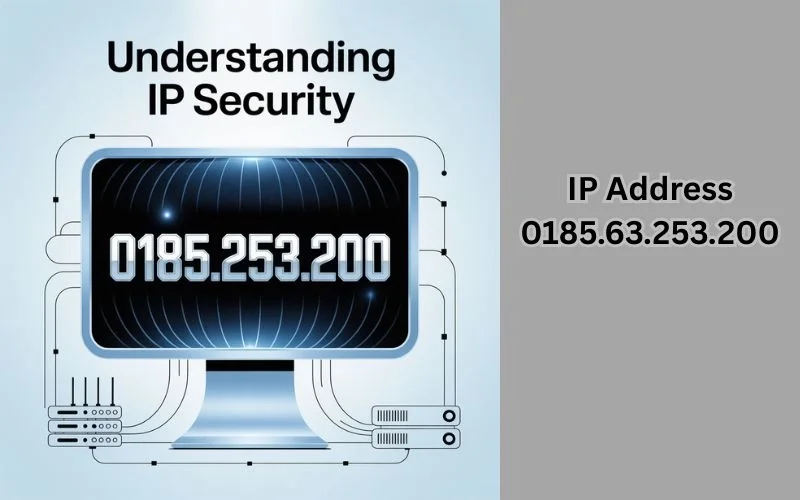
When you see 0185.63.253.200, the leading zero in the first octet is a formatting quirk. In standard networking, leading zeros are not significant and are typically stripped. So 0185.63.253.200 resolves to the same address as 185.63.253.200 in most networking tools, operating systems, and server environments. The address itself remains perfectly interpretable — the zero is cosmetic rather than functional.
This is an important clarification because it means that when 0185.63.253.200 appears in your logs or analytics, your system is reading it correctly regardless of the notation used. The data it carries is real and trackable.
What 0185.63.253.200 Represents in Practical Terms
Every IP address is assigned and managed by an organization or ISP. The global registry of IP address allocations is maintained by regional internet registries such as RIPE NCC (for Europe and surrounding regions), ARIN (for North America), APNIC (for Asia-Pacific), and others. These organizations assign address blocks to ISPs, hosting companies, data centers, and enterprises.
In the case of 0185.63.253.200, the address falls within a publicly routable IP block. That means it is accessible from anywhere on the open internet and is associated with a server, networking device, or internet-connected system operated by a specific organization. Whether that organization is a web hosting provider, a cloud computing company, a telecommunications firm, or a private enterprise depends on who has been assigned that particular range of addresses.
Using publicly available WHOIS lookup tools — such as those provided by ARIN, RIPE, or third-party services like IPinfo.io — you can query the registration details associated with 0185.63.253.200 to learn more about the organization behind it. These lookups typically return the name of the registrant, the country of registration, the address range owned, and contact information for abuse reporting if needed.
This kind of investigation is a standard first step whenever an unfamiliar address like 0185.63.253.200 appears in your network environment and you want more context about its origins.
Why 0185.63.253.200 Might Appear in Your Server Logs
Server logs are one of the most common places people encounter addresses like 0185.63.253.200. Every time a device makes a request to a web server — whether to load a webpage, query an API, download a file, or interact with a web application — the server records that request along with the source IP address. This is standard logging behavior across virtually all web server software, including Apache, Nginx, IIS, and others.
So if 0185.63.253.200 appears in your access logs, it simply means that a device associated with that address sent a request to your server at some point. This is, in the vast majority of cases, entirely unremarkable. Web servers receive requests from thousands of different IP addresses every day, representing a mix of real human visitors, search engine crawlers, uptime monitoring bots, security scanners, and automated tools of various kinds.
The more meaningful question isn’t just whether 0185.63.253.200 appeared in your logs — it’s what it did when it got there. A single request to your homepage is almost certainly harmless. A rapid series of requests to login pages, admin panels, or file directories is a different matter and warrants closer attention.
Context is everything when analyzing log data. Volume, frequency, the specific endpoints being accessed, the HTTP methods being used, and the time distribution of requests all combine to paint a picture of whether 0185.63.253.200 represents normal traffic or something worth flagging.
How to Investigate 0185.63.253.200 Properly
Step One: Run a WHOIS and Geolocation Lookup
The first and most informative step when investigating 0185.63.253.200 is to run it through a WHOIS lookup tool. This will tell you who owns the IP block, what organization it’s registered to, and in which country or region it’s allocated. Geolocation data can also give you an approximate physical location — though keep in mind that IP geolocation is an estimate, not a precise address.
Reputable tools for this include the RIPE NCC WHOIS database at whois.ripe.net, the ARIN registry at search.arin.net, and general-purpose IP intelligence platforms that aggregate data from multiple sources. Within minutes, you’ll have significantly more context about the nature of 0185.63.253.200 than you did before.
Step Two: Analyze the Traffic Pattern
Once you have organizational context, turn back to your logs and look at the behavioral pattern. How many requests did 0185.63.253.200 make, and over what time period? Were all the requests to a single endpoint, or did they span many different pages or paths? Did the requests use normal HTTP methods like GET and POST, or were they probing with less common methods? Did they carry a recognizable user-agent string — such as one associated with a known search engine bot — or was the agent generic, blank, or suspicious?
Answering these questions doesn’t require advanced technical skill. Most server logging software, including standard access logs in Apache or Nginx format, gives you all of this data in readable form. Log analysis tools like GoAccess, AWStats, or even a simple grep command can help you filter and summarize activity from a specific address like 0185.63.253.200 quickly.
Step Three: Cross-Reference With Threat Intelligence Databases
Several publicly accessible threat intelligence databases maintain lists of IP addresses that have been associated with malicious activity — including scanning, brute-force attacks, spam distribution, and botnet operation. Checking 0185.63.253.200 against these databases can tell you whether it has a known reputation for problematic behavior.
Resources like AbuseIPDB, Shodan, VirusTotal’s IP lookup feature, and IBM X-Force Exchange all allow you to search an IP address and review any reported incidents associated with it. A clean record doesn’t guarantee the address is harmless, but a long history of abuse reports is a strong signal that additional caution is warranted.
Security Implications of 0185.63.253.200
When the Traffic Is Benign
Many appearances of 0185.63.253.200 in server environments are completely benign. Hosting companies and cloud providers operate large fleets of servers that perform automated tasks on behalf of their customers — tasks like website uptime monitoring, performance testing, content delivery, and security scanning. If your website or application is being monitored by a third-party tool, or if a legitimate service is regularly checking your API endpoints, the requests will appear in your logs from server-side IP addresses that might be unfamiliar to you.
Similarly, search engine crawlers from Google, Bing, and other search platforms originate from specific IP ranges. If a new crawler address begins indexing your site, it will show up in your logs just like 0185.63.253.200 might — new, unfamiliar, and worth a quick check but rarely cause for alarm.
When Caution Is Appropriate
There are circumstances where 0185.63.253.200 or any unfamiliar IP address warrants more active attention. If the address is generating high volumes of requests in a short time window, it may indicate automated scraping, a distributed denial-of-service attempt, or a vulnerability scanner probing your system for weaknesses. If it’s consistently targeting authentication endpoints — login pages, password reset forms, admin dashboards — it may be participating in credential-stuffing or brute-force activity.
In these cases, standard defensive measures apply. Web application firewalls, rate limiting, CAPTCHA on sensitive forms, and fail2ban-style automatic blocking tools are all effective ways to protect your infrastructure without having to manually review every IP address that shows up in your logs. If 0185.63.253.200 is confirmed to be malicious, adding it to a blocklist is a straightforward remediation step.
The Broader Role of IP Addresses in Digital Security and Privacy
Understanding 0185.63.253.200 is part of a larger literacy around how the internet actually works — and why that literacy matters more than ever. As digital infrastructure becomes more complex and cyber threats more sophisticated, the ability to read and interpret network data is a genuinely valuable skill.
IP addresses are not just technical identifiers. They’re breadcrumbs that trace the movement of data across global networks. They help investigators track down bad actors, help administrators tune their security postures, and help businesses understand where their audiences are coming from. They are also, increasingly, a subject of privacy concern — because the same visibility that helps security teams can also be used to monitor and profile individuals.
This dual nature means that responsible use of IP data, including data associated with 0185.63.253.200, requires both technical knowledge and ethical awareness. Looking up an IP address to understand traffic in your own systems is perfectly appropriate. Using IP data to track individuals without consent is not.
Should You Block 0185.63.253.200?
The answer to this question is: it depends — and that’s not a cop-out. Blocking an IP address is a simple action, but it should be an informed one. If your investigation has shown that 0185.63.253.200 is generating legitimate traffic — whether from a known service, a real user, or a verified crawler — blocking it may cut off useful access without any security benefit.
On the other hand, if analysis reveals that 0185.63.253.200 is engaged in suspicious or aggressive behavior, if it appears on threat intelligence blocklists, or if your security team has flagged it as a source of unwanted traffic, blocking it at the firewall or web server level is a reasonable and proportionate response.
The key principle is to make decisions based on evidence rather than instinct. An unfamiliar IP address is not inherently dangerous — it’s just unfamiliar. Investigation transforms it from an unknown into something you understand, and that understanding is what should drive your response.
Conclusion: 0185.63.253.200 in Context
When you step back and look at the full picture, 0185.63.253.200 is a publicly routable IP address that, like millions of others on the internet, represents a device or server engaged in network activity. It might be a hosting provider’s infrastructure, a monitoring service, a search engine bot, or — in less common cases — a source of unwanted traffic. What it is in your specific situation depends entirely on the context in which you encountered it.
The most important takeaway from this guide is that you now have the tools and framework to find out. A WHOIS lookup, a log analysis, and a threat intelligence check are all you need to move from uncertainty to clarity about 0185.63.253.200. From there, you can make an informed, proportionate decision about how to respond.
The internet is built on these numbers. Understanding them — even one address at a time — makes you a more capable, confident, and secure participant in the digital world.
Frequently Asked Questions About 0185.63.253.200
Q1: What is 0185.63.253.200 and is it a valid IP address?
Yes, it is effectively a valid IP address. The leading zero in the first octet is a formatting convention that most networking systems ignore, treating it identically to 185.63.253.200. It represents a publicly routable IPv4 address assigned to a specific organization or internet service provider within the global IP registry system.
Q2: Why did 0185.63.253.200 appear in my server logs?
It means a device associated with that address made a request to your server at some point — this could be a real visitor, an automated bot, a web crawler, a monitoring service, or a security scanner. The appearance of any IP address in server logs is standard and expected. What matters is the pattern of activity, not just the presence of the address itself.
Q3: Is 0185.63.253.200 dangerous or malicious?
Not necessarily. An IP address is not inherently dangerous — its risk depends entirely on what it does when it contacts your system. To assess whether 0185.63.253.200 poses any risk, run it through a WHOIS lookup to identify the owning organization, review the traffic pattern in your logs, and check it against threat intelligence databases like AbuseIPDB for any reported history of malicious behavior.
Q4: How can I find out who owns or controls 0185.63.253.200?
Use a WHOIS lookup tool such as the one provided by RIPE NCC at whois.ripe.net, or a general IP intelligence service like IPinfo.io or Shodan. These tools will show you the registered owner of the IP block, the country of registration, the ISP or hosting company involved, and contact information for abuse reports if needed.
Q5: Should I block 0185.63.253.200 on my server or firewall?
Only if your investigation gives you a clear reason to do so — such as confirmed malicious behavior, a poor reputation on threat intelligence platforms, or unwanted automated activity targeting sensitive areas of your system. Blocking an IP without evidence can unnecessarily cut off legitimate traffic. Make decisions based on data, not just unfamiliarity.
back to home

Ryan Beck is an experienced SEO strategist and blogging expert with over 20+ years of hands-on experience in digital marketing. He has built a strong reputation for helping businesses grow their online presence through data-driven SEO strategies, high-quality content creation, and audience-focused blogging.