Best Suspiro a la Limeña Near Me: A Complete Guide to Finding Peru’s Most Beloved Dessert
If you have ever searched for the best suspiro a la limeña near me, you already know the craving is real. This silky, layered Peruvian dessert — rich dulce de leche beneath a cloud of port wine meringue — has a way of lodging itself in your memory long after the last spoonful. Whether you first tried it at a Peruvian grandmother’s table, at a trendy Lima-inspired bistro, or at a bustling Latin food market, one taste is usually all it takes to send you searching for more.
This guide is built for exactly that quest. We will explore the dessert’s deep cultural roots, break down what separates a truly exceptional version from an ordinary one, offer practical strategies for locating the finest Peruvian spots in your area, and arm you with the questions to ask before you commit your sweet tooth to any particular kitchen. By the end, you will know how to find — and recognize — an outstanding suspiro a la limeña wherever you happen to be.
What Exactly Is Suspiro a la Limeña?
The name translates literally to “sigh of the Lima woman,” a poetic phrase attributed to the nineteenth-century Peruvian poet José Gálvez, who supposedly described the dessert as soft and sweet as a woman’s sigh after watching his partner prepare it. That romantic origin story has followed the dish across centuries and continents, giving it a cultural weight that few desserts can claim.
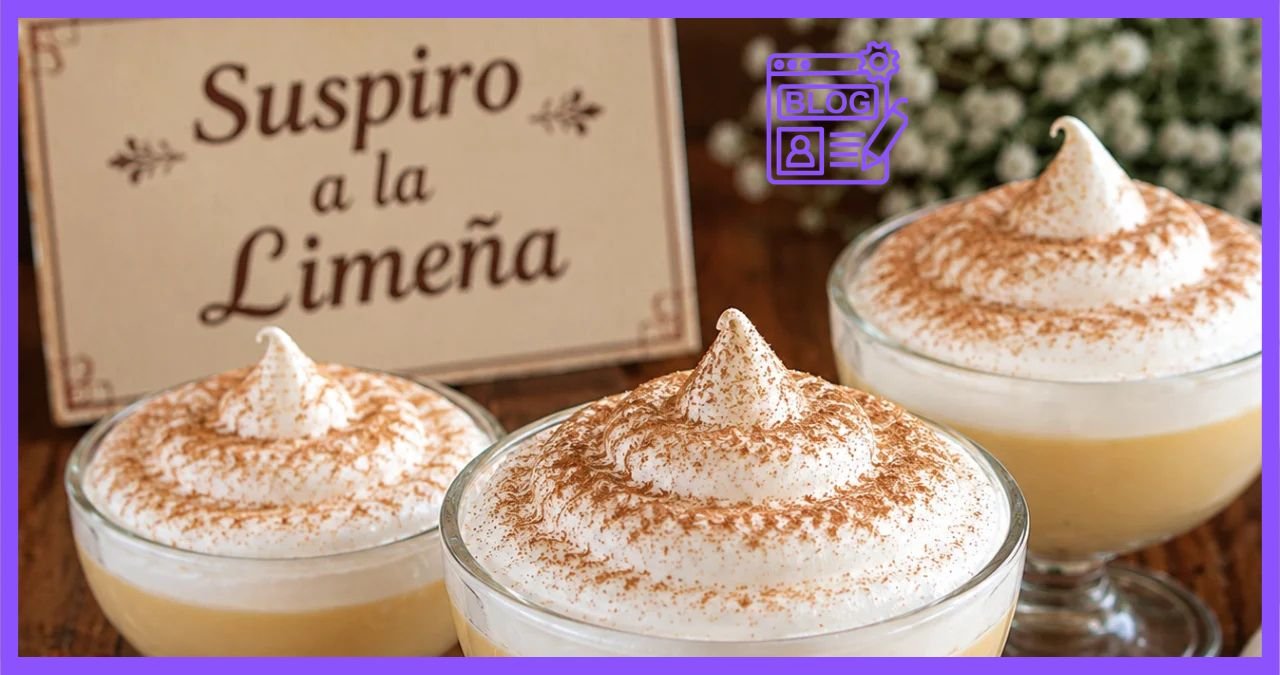
At its core, the dessert is constructed in two distinct layers. The base is a thick, amber-colored manjar blanco — essentially a slow-cooked dulce de leche made from evaporated and condensed milk, egg yolks, and cinnamon. The topping is a glossy, stabilized meringue fortified with port wine, which lends a faint, winey sweetness and a blush-pink hue. The contrast between the dense, caramel-forward bottom and the airy meringue crown is precisely what makes this dessert so memorable.
Unlike many globally recognized sweets, suspiro a la limeña remains deeply tied to its homeland. It is one of the signature dishes of Lima’s culinary identity, appearing on the menus of restaurants ranging from street-corner picanterías to the world-renowned fine-dining establishments that have helped Peruvian cuisine earn international acclaim. When you search for the best suspiro a la limeña near me, you are not just looking for sugar — you are looking for a connection to one of the world’s most celebrated food cultures.
“The contrast between a dense, caramel-forward base and a gossamer port wine meringue is what makes an authentic suspiro a la limeña genuinely unforgettable — and worth every minute of the search.”
The Building Blocks of an Authentic Recipe
The Manjar Blanco Base
Authentic manjar blanco begins with evaporated milk and condensed milk cooked slowly over a low flame, stirred continuously to prevent scorching. Egg yolks are tempered in and a cinnamon stick infuses warmth throughout. The process can take upward of forty minutes, requiring patience and attention. Shortcuts — using store-bought dulce de leche without further cooking, or skipping the egg yolks — produce a noticeably thinner, less complex result. When you are evaluating a restaurant, a properly made base should be spreadable and thick but never grainy, with a deep butterscotch color and subtle cinnamon warmth.
The Port Wine Meringue
The meringue is made from egg whites and sugar syrup cooked to the soft-ball stage — an Italian meringue technique that produces a stable, glossy foam that holds its shape at room temperature. Port wine is folded in at the end, and a small amount of ground cinnamon is dusted over the surface before serving. The meringue should be light enough to quiver when the bowl is tapped, yet dense enough that a spoon pushes through with gentle resistance. A flat, over-whipped, or grainy meringue signals that corners were cut somewhere in the process.
Understanding these fundamentals helps you identify a kitchen that truly respects the recipe — an essential step when hunting for the best suspiro a la limeña near me.
Quick Taste Checklist Rich, caramelized base with visible depth of flavor — not thin or runny. Meringue that is glossy and holds distinct peaks, not flat or foamy. A faint but unmistakable note of port wine in the topping. Ground cinnamon dusted on top, visible before you dig in. Served in a small ceramic cup or glass — the traditional presentation.
How to Find the Best Suspiro a la Limeña Near Me
Start With Specialized Peruvian Restaurants
The single most reliable indicator of an excellent suspiro a la limeña is a restaurant that focuses specifically on Peruvian cuisine rather than offering it as a footnote on a broader Latin American menu. Peruvian cooking is highly regional and technique-dependent; restaurants that have invested in authentic recipes, Peruvian pantry staples, and staff who understand the cuisine’s nuance are far more likely to treat the dessert with the care it deserves. A quick search combining your city with terms like “authentic Peruvian restaurant,” “Lima-style kitchen,” or “cevichería” is a good starting point before narrowing your focus to dessert menus.
Once you have a shortlist, check whether suspiro a la limeña appears on the dessert menu rather than as an occasional special. Restaurants that feature it permanently typically have a standardized, well-practiced recipe — meaning you will receive a consistent result every visit.
Use Review Platforms Strategically
Google Maps, Yelp, and TripAdvisor all allow you to search for specific menu items in reviews. Type “suspiro” into the search bar on any of these platforms alongside your location, and you will often surface reviews that mention the dish by name, sometimes with photographs. Pay particular attention to reviews left by users who mention Peruvian heritage or who discuss the dish with specific knowledge — phrases like “tastes like what my abuela made” or “the manjar is thick and properly cooked” are strong positive signals. Conversely, vague praise such as “the dessert was sweet and nice” tells you very little about authenticity.
If you are using Google Maps, look for the “Photos” section of a restaurant page and search specifically for dessert images. A well-presented suspiro a la limeña should show visible layering — a golden-amber bottom and a pristine, domed meringue top. Flat, indistinguishable presentations in photos suggest a less careful preparation, and may indicate the kitchen is not prioritizing this iconic dessert.
Latin Food Markets and Specialty Bakeries
Many cities with significant Peruvian or Latin American communities have specialty markets and bakeries that sell prepared desserts to go. These spots are often overlooked by tourists but beloved by locals, and they may offer some of the most honest, home-style versions of the dessert you will find outside a private kitchen. Ask at a Latin grocery whether they carry prepared Peruvian sweets, or search specifically for “Peruvian bakery” in your area. The search for the best suspiro a la limeña near me frequently ends at small, family-run spots that are easy to miss in broader restaurant listings.
Ask the Peruvian Community Directly
Online communities are one of the most underused tools in the food-hunting arsenal. Facebook groups organized around Peruvian expats and food lovers in specific cities regularly share recommendations, home cook pop-ups, and event listings where traditional food is served. Reddit communities focused on local dining or on Peruvian cuisine can yield remarkably specific and reliable recommendations. When someone in these communities says a particular kitchen makes a great suspiro, they are almost always speaking from genuine experience rather than promotional material.
Regional and Modern Variations Worth Seeking Out
While the classic recipe is the benchmark, a number of respected Peruvian chefs have introduced thoughtful variations that are worth experiencing once you have established your baseline. Some versions incorporate lucuma — an Andean fruit with a maple-like, nutty sweetness — into the manjar base, adding complexity and a uniquely Peruvian character that sets them apart from the standard preparation. Others adjust the port wine content in the meringue, using a Pedro Ximénez sherry or a Pisco-based fortified wine for a distinctly local twist.
Contemporary Peruvian fine-dining restaurants have experimented with deconstructed presentations: the manjar served as a flowing caramel alongside crisp meringue shards, finished tableside with a dusting of powdered cinnamon. These creative reinterpretations are worth trying as a supplemental experience, but they should never replace your search for a masterfully executed traditional version. When you are on the hunt for the best suspiro a la limeña near me, start with the classic and branch into variations once you have a reliable reference point.
Pairing, Serving, and the Full Experience
Traditionally, suspiro a la limeña is served in small portions — the richness of the manjar means a few deliberate spoonfuls are more satisfying than a large serving. In Peruvian homes and traditional restaurants, it is often accompanied by a small cup of strong black coffee or a glass of chicha morada, the vivid purple corn drink whose slight tartness cuts through the dessert’s sweetness beautifully.
If you are dining at a Peruvian restaurant and the staff is attentive, do not hesitate to ask about the day’s preparation — some kitchens make the dessert fresh daily, while others prepare it in larger batches earlier in the week. A freshly made manjar and same-day meringue will always outperform a version that has been sitting refrigerated for two or three days, as the meringue can weep and lose its structure over time. The ideal serving temperature is just slightly below room temperature — cold enough to be refreshing, warm enough to let the manjar’s aromas bloom.
What to Say at the Restaurant
Even if your Spanish is limited, a few simple phrases can open a conversation that leads to a better experience. Asking “¿El suspiro se hace hoy?” (Is the suspiro made today?) signals to the kitchen that you are a knowledgeable guest who cares about freshness. Inquiring about the type of port wine used in the meringue, or whether the manjar is made in-house, communicates the same respect for the craft. Most Peruvian restaurateurs are deeply proud of their culinary heritage and will appreciate a guest who shares that enthusiasm — and they may go a step further to ensure your serving is especially well prepared.
Why This Dessert Deserves Your Full Attention
Peruvian cuisine has experienced a global renaissance over the past two decades. Lima is now consistently ranked among the world’s top dining cities, with restaurants like Central, Maido, and Astrid y Gastón drawing international attention and critical acclaim. The World’s 50 Best Restaurants has repeatedly recognized Peruvian establishments, and the broader culinary world has responded with growing respect for the country’s layered, biodiversity-driven food culture.
Suspiro a la limeña sits at the heart of that story. It is not a newcomer trying to impress — it is a centuries-old dessert that has survived colonialism, immigration, and globalization precisely because it is so perfectly constructed. The balance of fat, sugar, acid, and spice; the interplay of textures; the deeply personal cultural meaning — all of it adds up to a dessert that rewards careful attention and honest preparation. When you find the best suspiro a la limeña near me in your city, you are participating in a culinary tradition that stretches back hundreds of years and continues to evolve in the hands of skilled, passionate cooks.
For further reading on the history and culture of Peruvian desserts, the official Peru travel and culture portal (peru.travel) offers rich background on the country’s gastronomic heritage, including the role of traditional sweets in Lima’s cultural identity.
Conclusion: Your Search Is Worth Every Effort
Finding the best suspiro a la limeña near me is more than a dessert errand — it is a small cultural expedition. The dessert demands respect from the cook: slow-cooked manjar, carefully stabilized meringue, the right wine, and the patience to do it properly. Restaurants and bakeries that honor those requirements are out there in most cities with a Peruvian community, and they are absolutely worth finding.
Use the strategies in this guide — specialized restaurant searches, community forums, review platform deep dives, and direct conversation with the staff — to narrow your shortlist. Trust your palate when you arrive, and look for the markers of an authentic preparation: depth of color in the manjar, visible gloss and structure in the meringue, and that distinctive port wine perfume rising from the glass. Once you find your go-to spot, share it. Great food is meant to be passed along, just like the recipe itself has been for centuries.
Frequently Asked Questions
What is suspiro a la limeña made of?
Suspiro a la limeña consists of two main components. The base is a thick manjar blanco made from evaporated milk, condensed milk, egg yolks, and cinnamon, cooked slowly until it reaches a rich, caramel-like consistency. The topping is an Italian-style meringue made from egg whites, sugar syrup, and port wine, which gives the dessert its signature blush color and subtle winey aroma. Ground cinnamon is dusted over the surface before serving.
How do I find the best suspiro a la limeña near me?
The most effective approach combines several strategies: search specifically for authentic Peruvian restaurants (rather than general Latin American menus) in your area, use Google Maps and Yelp to look for photo reviews mentioning the dish by name, explore local Latin food markets and Peruvian bakeries, and tap into Peruvian expat communities on Facebook or Reddit for local recommendations. Asking restaurant staff directly about whether the dessert is made fresh that day is also a reliable quality signal.
What does an authentic suspiro a la limeña taste like?
An authentic version delivers a multi-layered experience. The base is deeply sweet, buttery, and warm from cinnamon — similar to a very thick caramel pudding. The meringue on top is airy and glossy, with a delicate sweetness and a faint, pleasant wine note from the port. The dusting of cinnamon adds a final aromatic touch. The contrast between the dense bottom layer and the light meringue is the defining textural feature of the dessert.
Can suspiro a la limeña be made at home?
Yes, and many home cooks find it very rewarding to prepare. The manjar base requires patience — continuous stirring over low heat for thirty to forty minutes — but the technique is accessible even for cooks without formal training. The Italian meringue requires a candy thermometer to achieve the correct sugar syrup temperature (around 118°C / 244°F), which stabilizes the egg whites. Detailed recipes are available through resources like the Peru cultural portal and established food publications covering Latin American cuisine.
Is suspiro a la limeña the same as dulce de leche?
They are related but not the same. Dulce de leche is a broad category of slow-cooked milk caramel found across Latin America, made by reducing sweetened milk until it thickens. The manjar blanco in suspiro a la limeña is a specific Peruvian variation that includes egg yolks and cinnamon, giving it a richer texture and more complex flavor than standard dulce de leche. The addition of the port wine meringue crown is entirely unique to the Peruvian dessert and has no equivalent in other dulce de leche preparations.
Best Pollo al Chilindron Near Me

Ryan Beck is an experienced SEO strategist and blogging expert with over 20+ years of hands-on experience in digital marketing. He has built a strong reputation for helping businesses grow their online presence through data-driven SEO strategies, high-quality content creation, and audience-focused blogging.