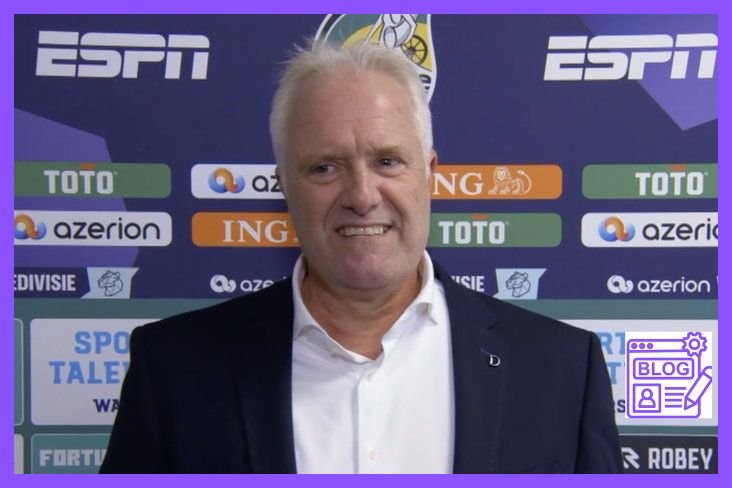
Marten Glotzbach: The Coach, Educator, and Quiet Force Behind a Football Dynasty
In a world where football headlines are dominated by names on scoreboards and touchlines lit by camera flashes, there exists a quieter kind of influence — one built in classrooms, training grounds, and the steady rhythms of a life dedicated to developing others. Marten Glotzbach is that kind of person. Not a household name in the global sense, yet deeply respected in the circles that matter most: Dutch football development, youth coaching, and sports education.
His story is one of genuine purpose. Marten Glotzbach has spent decades weaving together two parallel careers — as a football coach and as an economics teacher — in a way that speaks to a man who sees mentorship not as a job title, but as a calling. And beyond his own professional achievements, he is perhaps most widely known outside the Netherlands as the husband of Sarina Wiegman, widely regarded as one of the greatest women’s football managers the sport has ever seen. But to reduce Marten Glotzbach to simply “the husband of a famous coach” would be to miss the full picture entirely.
Who Is Marten Glotzbach? A Background Worth Knowing
Marten Glotzbach was born on July 2, 1968, in Germany, though he has spent the vast majority of his professional life in the Netherlands. Growing up in a country — and later settling in one — where football is embedded in everyday culture, it was perhaps inevitable that the sport would find its way into the center of his life.
After completing his schooling, Marten pursued higher education with clear ambition and direction. He earned a Bachelor’s degree in Marketing and Commercial Economics from HEAO Den Haag between 1989 and 1994. That academic foundation in commerce and business thinking would go on to shape not just his teaching approach, but his understanding of how organizations — including football clubs — operate and grow. He later returned to formal education, completing a Bachelor of Education in Economics between 2006 and 2009, adding a teaching qualification to his already varied skill set.
This dual academic background — business and education — is a defining thread through everything Marten Glotzbach has built in his career.
Marten Glotzbach’s Teaching Career: The Classroom as a Coaching Ground
Since 2000, Marten Glotzbach has worked as an economics teacher at Segbroek College in The Hague, Netherlands. For over two decades, he has stood in front of classrooms — teaching economic principles, financial literacy, and the kind of structured thinking that extends well beyond supply and demand curves.
What is particularly notable about his teaching approach is the way it overlaps with his coaching philosophy. Those who have worked alongside him describe a man who communicates complex ideas clearly, who meets learners where they are, and who understands that real development — whether in a student or a footballer — is always a long-term investment. His background in marketing and commerce also gives him a practical edge in the classroom; he teaches principles he understands from the inside out.
It is worth pausing to appreciate how rare this combination is. Most football coaches operate entirely within sport. Most economics teachers operate entirely within academia. Marten Glotzbach has built a career that lives meaningfully in both worlds simultaneously — and he has done so for the better part of three decades.
The Coaching Journey: From Youth Football to ADO Den Haag
Marten Glotzbach’s footballing career has been built quietly and deliberately. He began working in youth coaching at local clubs in the Netherlands, developing a philosophy centered on gradual improvement, personal development, and long-term player growth. He was never chasing a top-flight headline job. He was building something more durable.
In 2018, he joined the women’s youth football program at ADO Den Haag — one of the Netherlands’ most storied football clubs. He began working with the under-16 and under-17 squads, and the impact was immediate and measurable. His focus on individual development and team cohesion yielded results: nine of the players from his under-17 squad were promoted to the senior ADO Den Haag women’s team, a testament to the depth of his developmental work.
ADO Den Haag recognized what they had in Marten Glotzbach. In December 2024, the club appointed him as head coach of the ADO Den Haag women’s senior team — a significant appointment that reflected his accumulated expertise and the trust the club had built in him over several years of grassroots work.
What Sets His Coaching Philosophy Apart
Several principles define the way Marten Glotzbach approaches coaching, and they are rooted in values rather than tactics alone. He emphasizes the human dimension of sport — recognizing that players are not simply athletes to be optimized, but individuals with personal histories, motivations, and needs. This approach, deeply informed by his years in education, creates environments where players feel seen and supported, not just trained.
He also prioritizes long-term development over short-term results. In a football world increasingly driven by immediate performance metrics, this is a contrarian and ultimately more sustainable approach. His understanding of ADO Den Haag’s identity and culture — built from years of working within the club — gives him a natural advantage in maintaining cohesion between the youth academy and the senior squad, ensuring a consistent identity runs through the organization.
Marten Glotzbach and Sarina Wiegman: A Partnership Built on Football and Mutual Support
No profile of Marten Glotzbach would be complete without acknowledging the remarkable partnership he shares with his wife, Sarina Wiegman. The two met in 1994 and married in 1995, and for over three decades they have built a life that is deeply intertwined with the sport they both love.
Sarina Wiegman needs little introduction in football circles. She led the Netherlands women’s national team to the UEFA Women’s EURO 2017 title and then took charge of the England Women’s National Football Team in September 2021. Under her management, England won the UEFA Women’s EURO 2022 — the Lionesses’ first-ever major trophy — and then retained the title by winning UEFA Women’s EURO 2025 in Switzerland. She has been named The Best FIFA Women’s Coach on five separate occasions, a record she continues to extend. The Football Association describes her as one of the most significant figures in the history of the women’s game.
Behind that extraordinary career has been Marten Glotzbach — steady, supportive, and deeply invested in her success. This is not a passive role. He understands football at a technical and developmental level, having spent his own career in the sport. He has spoken about their partnership in terms of shared passion rather than sacrifice, and those who know the family describe him as someone who genuinely celebrates his wife’s achievements without any trace of resentment or rivalry.
A Football Family Through and Through
The Glotzbach-Wiegman household is, in the most literal sense, a football family. The couple has two daughters — Sacha and Lauren Glotzbach. Lauren followed the family calling into football and played for the youth academy at ADO Den Haag, meaning that for a period, she was coached by her own father. Sacha has been associated with Sports Club Monster. Both daughters grew up in an environment shaped by a shared passion for the game, discipline, and a genuine appreciation for what football can teach a young person about teamwork, resilience, and hard work.
The family is known for keeping its private life genuinely private. You will not find them staging lifestyle photoshoots or narrating their daily routines for social media. They are, as one British outlet put it, “just living their lives while Sarina is out there making history.”
Marten Glotzbach’s Influence on Dutch Women’s Football
It is worth stepping back to appreciate the broader contribution that Marten Glotzbach has made to Dutch women’s football. While individual accolades are difficult to quantify for someone who has operated primarily in youth development, the aggregate impact of a coach who promotes nine players from the under-17s to the senior squad is substantial. Those players go on to form the backbone of a team, carrying with them the values and tactical education instilled during formative years.
Dutch women’s football has undergone significant growth in recent decades, and much of that growth is built on the work of coaches operating at exactly the level where Marten Glotzbach has focused his career — the youth academies, the local clubs, the development programs that never make international headlines but quietly produce the talent that does. His work at ADO Den Haag is a microcosm of this larger story.
His appointment as head coach of the ADO Den Haag women’s senior team in late 2024 marks a new chapter — one in which his influence will now extend to the highest level of the club’s women’s football operation. It is a role that carries significant responsibility and one that he arrived at through years of patient, principled work.
The Significance of Living Outside the Spotlight
One of the most interesting dimensions of the Marten Glotzbach story is what it says about different definitions of success. In an era that rewards visibility — where influence is often measured in follower counts and appearance fees — he has built something quieter but arguably more enduring: a career of genuine substance, sustained over decades, recognized by the people who are closest to the work.
He does not have a Wikipedia page of his own. He does not give interviews about his personal life. He has not written a memoir or appeared on a major podcast. And yet his fingerprints are on the careers of dozens of young Dutch footballers, on the economic understanding of countless students at Segbroek College, and on the most decorated women’s football manager in international history.
That is a particular kind of impact — one that does not photograph easily but accumulates meaningfully over time.
Marten Glotzbach Today: A Career Still Very Much in Motion
As of 2026, Marten Glotzbach is in his late fifties and showing no signs of slowing down. His appointment as head coach of ADO Den Haag women’s team gives him a fresh challenge at the senior level after years of youth development work. He continues to teach at Segbroek College, maintaining the educational thread that has run through his professional life since 2000. And he continues to share a home and a life with Sarina Wiegman, a woman whose career he has supported through European Championships, World Cup finals, and the kind of relentless public scrutiny that comes with managing a high-profile national team.
His story is, at its core, a story about the different ways a person can matter in their field. Marten Glotzbach chose depth over breadth, consistency over celebrity, and purpose over profile — and in doing so, he has built something that very few careers in any profession can claim: a legacy of genuine, lasting contribution.
Conclusion
Marten Glotzbach is a figure who rewards closer attention. Beneath the surface of a man known primarily as the husband of one of football’s greatest managers, there is a coach, educator, and mentor whose career spans more than two decades of meaningful work in Dutch football and academia. His journey from marketing student to head coach of ADO Den Haag women’s team — running parallel to a long-standing career as an economics teacher — is a story of quiet ambition and consistent purpose.
Whether you are interested in the human stories behind football’s great families, curious about the people who shape youth development in the Netherlands, or simply looking to understand the full picture of who Marten Glotzbach is, this is a life that offers something genuinely worth knowing about. He represents the kind of behind-the-scenes contribution that football — and indeed most fields — could not function without. And that, in itself, is worth celebrating.
Frequently Asked Questions
Q1: Who is Marten Glotzbach?
Marten Glotzbach is a Dutch football coach and economics teacher based in The Hague, Netherlands, best known professionally for his work at ADO Den Haag and as the husband of England Women’s head coach Sarina Wiegman.
Q2: What is Marten Glotzbach’s job?
He holds two roles simultaneously: he has been an economics teacher at Segbroek College in The Hague since 2000, and since December 2024 he has served as the head coach of the ADO Den Haag women’s senior football team.
Q3: How long have Marten Glotzbach and Sarina Wiegman been married?
They met in 1994 and married in 1995, making their marriage over 30 years long as of 2026 — a partnership built on a shared love of football and mutual professional respect.
Q4: Do Marten Glotzbach and Sarina Wiegman have children?
Yes. They have two daughters, Lauren and Sacha Glotzbach. Lauren played youth football at ADO Den Haag and was coached there by her father during part of his tenure with the club.
Q5: What is Marten Glotzbach’s educational background?
He earned a Bachelor’s degree in Marketing and Commercial Economics from HEAO Den Haag (1989–1994) and later completed a Bachelor of Education in Economics (2006–2009), which qualified him as a formal economics teacher.

Ryan Beck is an experienced SEO strategist and blogging expert with over 20+ years of hands-on experience in digital marketing. He has built a strong reputation for helping businesses grow their online presence through data-driven SEO strategies, high-quality content creation, and audience-focused blogging.